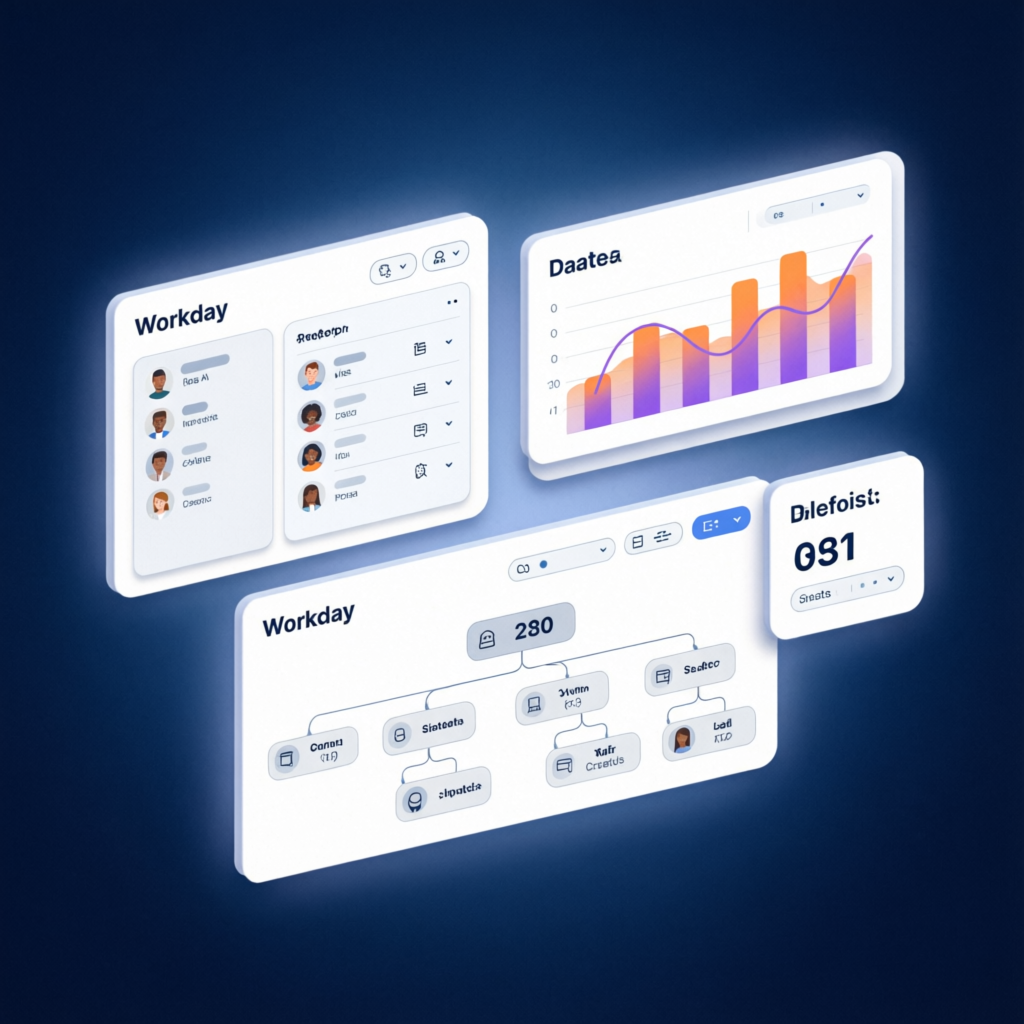
Workday Adaptive Planning is a valuable tool that can be beneficial in various situations, but gaining access to it can be challenging.
To ensure optimal use, it is crucial to notify the administrator or IT team of any issues and address them promptly.
Getting Workday Adaptive Planning Ready
The Workday Adaptive Planning Tutorial in Atlanta, Georgia, USA, offers a comprehensive guide on how to install and integrate Workday Adaptive Planning with Lead for seamless reporting.
The course covers key topics such as the plug-in’s use in Outperform, allowing users to log in and start building reports. A diagram is provided via Office Connect.
Creating and Visualising Sheets in Workday Adaptive Planning
Workday Adaptive Planning allows financial planning sheets to be created, but access is required for visualisations.
If you can’t view or edit these sheets, enrol in a Workday Adaptive Planning Tutorial in Atlanta, Georgia, USA, to learn proper permission management.
Data Integration and Reporting in Workday Adaptive Planning
Workday Adaptive Planning integrates data from various sources, making reporting an immediate task.
Reports can be shared or personal, fostering teamwork. The Workday Adaptive Planning Tutorial in Atlanta, Georgia, USA, emphasises effective organisation of this process, focusing on the use of shared or individual folders.
Budgeting and Prediction with Workday Adaptive Planning
Workday Adaptive Planning offers comprehensive budgeting and forecasting features to maintain finance team stability.
The initial step is budget preparation, which serves as the foundation for the outlook. Attending a Workday Adaptive Planning Tutorial in Atlanta, Georgia, USA can enhance confidence in budget management and ensure effective future planning.
Insight Workday Adaptive Planning
Workday Adaptive Planning is a system that enables budgeting and planning by linking projections to actual results.
This ensures that the budget accurately reflects the current situation. Regardless of the budget or plan version discussed, it is compared with actuals to make finance planning more accurate and discerning.
Creating a Budget in Workday Adaptive Planning
In Workday Adaptive Planning, a budget is a crucial tool for financial decision-making.
To create a budget, import numbers into the plan versions and fill in the years and numbers.
The process is easy and natural, and mastery of this process is a key goal in the Workday Adaptive Planning Course.
This future-oriented document helps inform finance-related decisions.
Mapping Accounts in Workday Adaptive Planning
Mapping accounts is crucial in Workday Adaptive Planning, as it ensures connections to the existing system.
If auto-mapping fails, manual mapping or uploading an account mapping file is necessary.
This license ensures proper alignment of data and financial reports, ensuring accurate details are accurately displayed.
Certifying correctness in Workday Adaptive Planning
Data integrity is crucial for effective Workday Adaptive Planning. However, there may be issues with imported accounts due to name discrepancies.
To address this, the system must have correct account names and update them if necessary.
This ensures transparency in finance team data analysis and fact-based decision-making, which is covered in the Workday Adaptive Planning Course.
Loading Budget and Plan Data in Workday Adaptive Planning
The process of loading budget and plan data into Workday Adaptive Planning is straightforward and productive when structured mapping and correct templates are in place.
This method not only ensures smooth financial planning but also reduces discrepancies between budgeted and actual figures, making it a convenient tool to use.
Sympathy Workday Adaptive Planning
Workday Adaptive Planning is crucial for effective financial planning. To avoid data issues, import and structure each version correctly.
When adding a budget, use the names of the plans’ methods first.
The versions separate actual, outlook, and budget data, allowing for better record management and financial projections.
Selecting the appropriate edition is essential for successful use.
Workday Adaptive Planning Configuration for Budget Management
To use Workday Adaptive Planning, first upload budget data and select the appropriate plan version.
Each version is designed for differentiating records, with budget, plan, and actual versions having specific uses in financial data classification.
Importing Data to Workday Adaptive Planning
When importing data in Workday Adaptive Planning, evaluate factors such as template variability and financial parameter mapping.
Use structured lists, like Warsaw lists, for mapping financial data and relating budgets to projections.
Joining a Workday Adaptive Planning Tutorial in Atlanta, Georgia, USA can provide valuable insights into these factors.
Refining Financial Templates in Workday Adaptive Planning
Workday Adaptive Planning emphasises the importance of process discernment and selecting the appropriate template for successful data integration.
By simplifying the import process, the same data structures are used as before. Parameter selection is crucial in Workday Adaptive Planning, as it ensures financial entries align with the allocated budget.
Levels and Assumptions in Workday Adaptive Planning
Workday Adaptive Planning emphasises empathy between parents and children, ensuring consistency in financial projections across all stores.
For example, in Mumbai, a 15% growth rate ensures consistent financial projections at all stores.
At the store level, assumptions are the primary part of Workday Adaptive Planning.
If individual store percentage increments differ, reports should be recorded at the store level, not the city level, allowing for a more accurate financial planning process.
Workday Adaptive Planning for Different Sheets
The Workday Adaptive Planning Tutorial in Atlanta, Georgia, USA, offers expert guidance on standard sheets, cube sheets, and model sheets for financial planning tasks.
These sheets help companies gain better clarity on their financial data and leverage the power of Workday Adaptive Planning.
Standard sheets include general ledger accounts and existing convention metrics, while cube sheets refer to the cube sheets, and model sheets refer to the model sheets.
This differentiation is essential for effective financial planning.
Workday Adaptive Planning Dimensions
Workday Adaptive Planning Dimensions enhance financial awareness by allowing companies to monitor profits specific to their products or employees.
Product dimensions are crucial for business analysis, as they reveal profitable products and enable proper tracking.
Employee dimensions are used to monitor individual performance and enhance workforce planning in Workday Adaptive Planning.
Dimensions versus Workday Adaptive Planning
Adaptive Planning is a tool that simplifies financial and business reporting for economic and business leaders.
It enables the organisation of product categories and employee data, thereby improving the overall financial planning process.
Workday Adaptive Planning’s dimensions section allows users to set up categories, including product names, employee hierarchies, and department classifications, thereby supporting the progress of financial management. This user-friendly tool is easy to use.
Working with the Dimensions of Workday Adaptive Planning
Workday Adaptive Planning is a tool that simplifies data management by integrating manual processes for dimension setting and import.
This technique enables businesses to manage large datasets efficiently, importing multiple products simultaneously.
End-users can download and fill out templates for each product, reducing the need to enter each one individually.
This approach is explained in the Workday Adaptive Planning Tutorial in Atlanta, Georgia, USA, ensuring efficient and effective data management.
Directing Product Planning in Workday Adaptive
Workday Adaptive Planning offers unlimited outcomes by tagging features to dimensions, allowing for deeper analysis.
By using product colours as a metric, enterprises can identify sales trends and distinguish between common and uncommon characteristics.
The Workday Adaptive Planning Tutorial in Atlanta, Georgia, USA, helps identify unique product traits and establishes bonds between products.
For instance, a product’s colour can be used to categorise and analyse sales trends.
Employee Analysis with Workday Adaptive Planning
Workday Adaptive Planning assigns gender attributes to employee data, enabling performance discernment based on gender.
This allows for the identification of gender-related performance trends. By understanding performance factors, businesses can optimise hiring and operational schemes based on data-driven patterns.
Enrolling in a Workday Adaptive Planning Tutorial in Atlanta, Georgia, USA can help master this analysis.
Large Spectrum Data Import with Workday Adaptive Planning
Workday Adaptive Planning is a tool that enables easy data import, particularly for organisations managing thousands of products.
This feature, which can be set to automatic through integration settings, creates dimension values for new products, eliminating the need for manual input.
This functionality is a key point taught in the Workday Adaptive Planning Tutorial in Atlanta, Georgia, USA.
Workday Adaptive Planning Enables the Creation of Models
Workday Adaptive Planning allows members to create models by organising data into standard, cube, and model sheets.
It drives clarity in accounts, dimensions, and currency trade rates, enabling strategic decision-making and improving businesses’ planning skills.
This process is crucial for accurate estimation and decision-making.
Financial Planning with Workday Adaptive Planning
Workday Adaptive Planning is a tool that streamlines financial planning by reducing time and resources spent on budgeting, forecasting, and reporting, thereby enhancing accuracy and efficiency. This guide provides a comprehensive overview.
Invoking Workday Adaptive Planning Recordings
Access to recordings of Workday Adaptive Planning sessions is crucial, especially if a session is missed.
To access the recordings, email the Cloud Basis training team, who will provide the tapes and any requested supporting materials.
Team Learning with Workday Adaptive Planning
The Hyderabad Workday Adaptive Planning Course is a collaborative initiative that brings together diverse participants to ensure a practical understanding and application of core concepts, offering support for any questions or uncertainties that may arise.
Why Workday Adaptive Planning is Important?
Workday Adaptive Planning represents a significant shift in financial planning for enterprises, enabling insights, effective budget management, and data-driven decision-making.
Understanding its functions can help both those in the early stages of their career and those more advanced in their work progress in financial management.
Stick around Connected with Workday Adaptive Planning
The text suggests that users utilise the Workday Adaptive Planning Tool for skill development and contact IT’s Cloud Infrastructure for assistance in challenging educational situations, ensuring seamless learning experiences.
Final Thoughts on Workday Adaptive Planning
Workday Adaptive Planning is a user-friendly tool that streamlines financial planning and reporting.
It is recommended to continue checking functions, answering questions, and using available resources to strengthen knowledge.
It is now just a part of the process to achieve financial success.
Lauren
Writing to inspire steady progress and mastery through online training.